

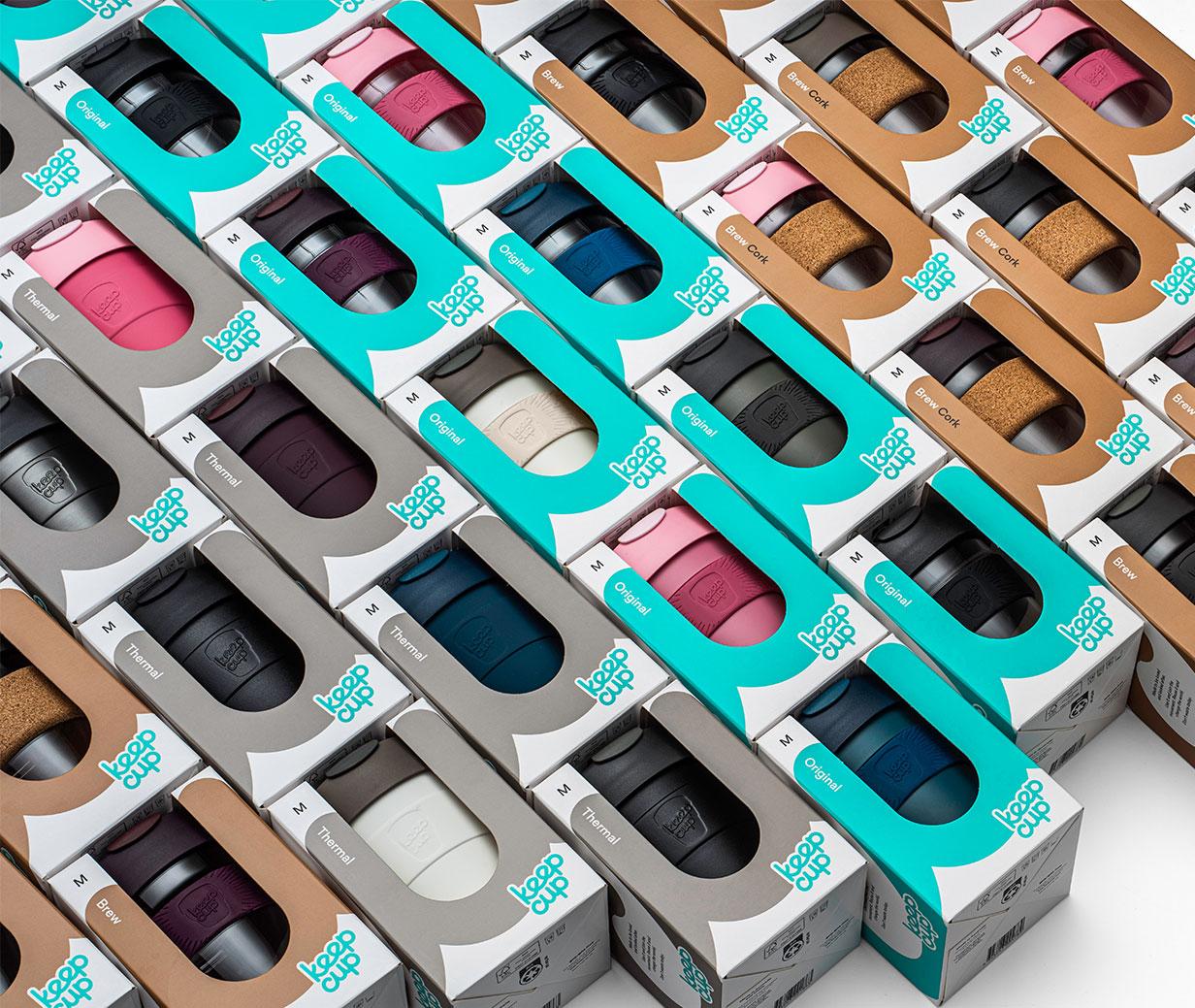
The cup is only part of the environmental story. The other part is the packaging the cup arrives in, the box, the paper, the inserts, the protective material. For a brand that exists to reduce single-use waste, the packaging has to live up to the product's own values.
Here's what KeepCup's packaging actually looks like in 2026, what choices sit behind those decisions, and what's still on the to-do list.
What KeepCup packaging is made of
The standard product packaging across the KeepCup range:
- Outer box: FSC-certified paperboard with high post-consumer recycled content.
- Inserts and protection: moulded pulp or recycled cardboard. No polystyrene foam. No bubble wrap.
- Inks and finishes: water-based and soy-based inks. No virgin plastic films.
- Closures and labels: paper-based, curbside-recyclable in standard Australian recycling streams.
The intent across every packaging decision is the same: everything that arrives with the cup should be recyclable through Australian curbside, with no special handling required from the customer.
What about shipping packaging?
Direct-to-customer shipping uses recycled paper-based mailers or cardboard cartons. No plastic mailers. No air pillows. No polystyrene chips.
For larger wholesale and corporate orders, shipping cartons are cardboard with paper-based protective packing. The cartons themselves are designed for reuse where possible.
FSC certification, what it means and why we use it
FSC (Forest Stewardship Council) certification means the paper-based components come from responsibly managed forests rather than from old-growth logging or unmanaged supply chains. For an Australian customer, FSC is the strongest single label confirming the paper packaging didn't contribute to native forest destruction.
All KeepCup paperboard packaging is FSC certified.
What's still on the to-do list
Three things we're working on but haven't fully solved:
- Reduced packaging volume. Each product still ships in more packaging than is structurally necessary. We're working with our manufacturing partners on tighter packaging that still protects the product in transit.
- Returnable shipping containers for wholesale customers. Pilots are in progress with several cafe partners.
- Compostable adhesives on labels and tape. Most of the current adhesives are recyclable but not home-compostable.
These aren't impossible problems, they're trade-offs we're working through with suppliers. We'll publish updates as they ship.
Why packaging matters more than people think
For a brand selling reusable products, packaging is the most visible point at which the brand's stated values either match its operations or don't. A reusable cup arriving in plastic-heavy, virgin-material packaging undermines the product's own story. Customers notice, and they're right to.
KeepCup's packaging choices aren't perfect, but they're consistent with what we ask our customers to do: avoid single-use plastic, choose materials that recycle well in the actual local infrastructure, and keep improving.
FAQs
Is KeepCup packaging recyclable in Australia?
Yes, all KeepCup paper-based packaging is FSC certified and recyclable through standard Australian curbside recycling streams. No special handling required.
Does KeepCup use plastic in packaging?
No virgin plastic films in product packaging. No polystyrene. No plastic mailers in direct-to-customer shipping. Inks are water- or soy-based.
What is FSC certification?
Forest Stewardship Council certification confirms paper materials come from responsibly managed forests. It's the strongest single label confirming paper packaging didn't contribute to native forest destruction.
How long do KeepCup products last?
KeepCup products are tested to 1,000 uses. With replacement parts available, the life of the product extends well beyond that, reducing total packaging volume across the product life.
KeepCup Thermal, A reusable coffee cup for every climate
KeepCup Thermal, A reusable coffee cup for every climate